
“Is Photography Art?”
(I have capitalized Art and Artist to speak of them as being in the true realm of Fine Art.)
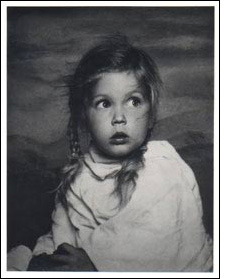 We hear over and over the question as to whether photography can be considered as its own form of Art. And we see numerous treatises on yes it is and no it isn’t. The main objection seems to be that it is primarily a mechanical process that handles most of the work—that the photographer is merely a pointer of a camera and from the moment of clicking the shutter the photographer has nothing further to do with it, other than some manipulation in the printing of the picture (If indeed the photographer does his own darkroom work. For example the WWII photographers overseas snapped the shutters, but the stateside labs developed the film and printed the pictures—the photographers usually had no idea what the results, if any, would be).
Perhaps I can offer one way that might help come to some conclusion. In 1956-7 I spent over six months with William Mortensen in Laguna Beach, California, learning his philosophies and techniques, both of which I have loyally practiced for over forty years as a portrait photographer. Mr. Mortensen had developed his own techniques of lighting the subject, determining the exposure, developing the film, and making the print. At every step, he ran afoul of the “Group f/64,” headed by Ansel Adams, who believed that there should be no “manipulation” either in developing the film or in making the print. It would seem that this philosophy itself would eliminate photography from the consideration of Art, by their own arguments. The group had so much clout that they were successful in the elimination of Mortensen from virtually every history of photography for over a decade. Mortensen reversed the basic concept of “Expose for the shadows and develop for the highlights,” by practicing the opposite. The f/64 concept demanded the darkroom technician to “pull” the negative at a certain point of development, guided by what’s known as the “gamma” factor. This short-changing of the negative robs it of a certain degree of its potential by stopping development before it is complete. I cannot argue the results as shown by luminaries such as the f/64 group—they have certainly produced magnificent photographs that will live on forever. But I can argue the basic concept. Mortensen said that a negative, compared with the ultimate “camera obscura,” the human eye, is restricted enough in its ability to record the complete delicate gradations of a subject, that to further rob it of that ability makes little sense. The above concept does just that.
The Mortensen concept “Expose for the highlights and develop for the shadows” results in complete development of the film, arriving at what he called the “7-Derivative,” or “7-D” negative. He even proved it by giving the film adequate agitation during the basic time for that film to be completely developed, say five minutes, then “going out to lunch”—he left the film in the developer for upwards to 1-1/2 hours, or just up to the time when developer breakdown would stain the negatives. From the 5-minute development on, nothing else can happen; everything has been done. With a totally developed negative, then minimal exposure need be done to the paper for a fully graded print, from its whitest white to its blackest black. I have done this, with no untoward effect on the negatives.
Getting to the point of the title, this practice of involving the photographer in every aspect of achieving a picture goes a long way to place photography in the halls of Art, but it has one more demand. Mortensen fulfilled that demand. He was a most competent artist. Long before going into photography he studied in New York with the artists Bridgeman, Henri, and Bellows, painting mostly cityscapes, spent a year in Greece painting all subject matter and finally ended up paying for his way by painting posters for taverns and nightclubs. Back in his home state in Salt Lake City he taught art classes in his old high school. I saw a couple of his oils that his wife Myrdith had in Laguna Beach—not great, but highly competent. The point is that he was a proven artist, carrying that talent into his work with photography. I’m sure that my own competence as an artist, albeit a technical artist as compared with a fine artist, has been behind my success at totally absorbing Mortensen’s techniques and accepting and applying his philosophies and so successfully carrying on with my own forty-plus-year practice as a portrait photographer. I have found no other photographer that produces portraits with the same quality as mine—I’m not tooting my own horn as much as to show so well the Mortensen influence in my work, work that I have seen no match for anywhere. From what I seen, my impression is that everyone learned from the same source so that the works of one are indistinguishable from those of the next—although they are good technicians, they do not have that spark of the artist. And that spark is a quality one is born with, not learned. However, an in-depth study of art history and an examination of the works of the Old Masters and successful Artists does tend to improve one’s understanding of Art and to improve his own work.
I have attended numerous photo shows and have gone through a multitude of photo magazines and books and have seen works by technicians, but few Artists. One illustration: Mortensen was invited to help judge a photo show in Santa Ana, one of the few times he was away from his Laguna Beach home and studio. He took with him his understanding of “schnitt,” a German noun meaning cut, slice, or incision, meaning the cutting of a “golden rectangle” to make two rectangles, the dividing line giving the formula “A is to B as B is to A-B.” This formula places the one major point of interest in a picture, both vertically and horizontally.
The prints were laid on the floor in straight lines as in a vegetable garden. The judges walked along between the lines of prints, indicating their choices. Mortensen looked at each print, muttering “Schnitt” or “No Schnitt,” picking up the too-few “Schnitts” and leaning them against a wall for further comparing. The other judges were shocked — most of their choices were not among Mortensen’s choices. He explained that if a print did not have good composition, it did not matter how well it had been exposed and printed, and that the application of “Schnitt” would easily determine between a print with good composition and one without. The other judges finally agreed—Mortensen’s final choice was the one given First Prize.
I have no argument with photographers showing their work in the usual displays. But when they try to pass off mediocre work as Art, work that is technically competent but without the true quality that Art demands, I raise an argument. I’m even no longer asked to judge photo shows because I refuse to consider color prints that do not indicate who printed them along with who shot the pictures. Most photographers farm out their color printing to laboratories that have the expensive equipment—this I understand, but the lab should be given due credit. So consider this: For photography to have its place in the world of Art, it must have within it that quality of having been achieved by the hand of a competent Artist, along with the hand of a technical photographer. Many technical photographers do magnificent work in the way of recording what the world has, but only Artist-photographers can do work that can hold its place in Art salons and Collections.
©2001 Robert Balcomb