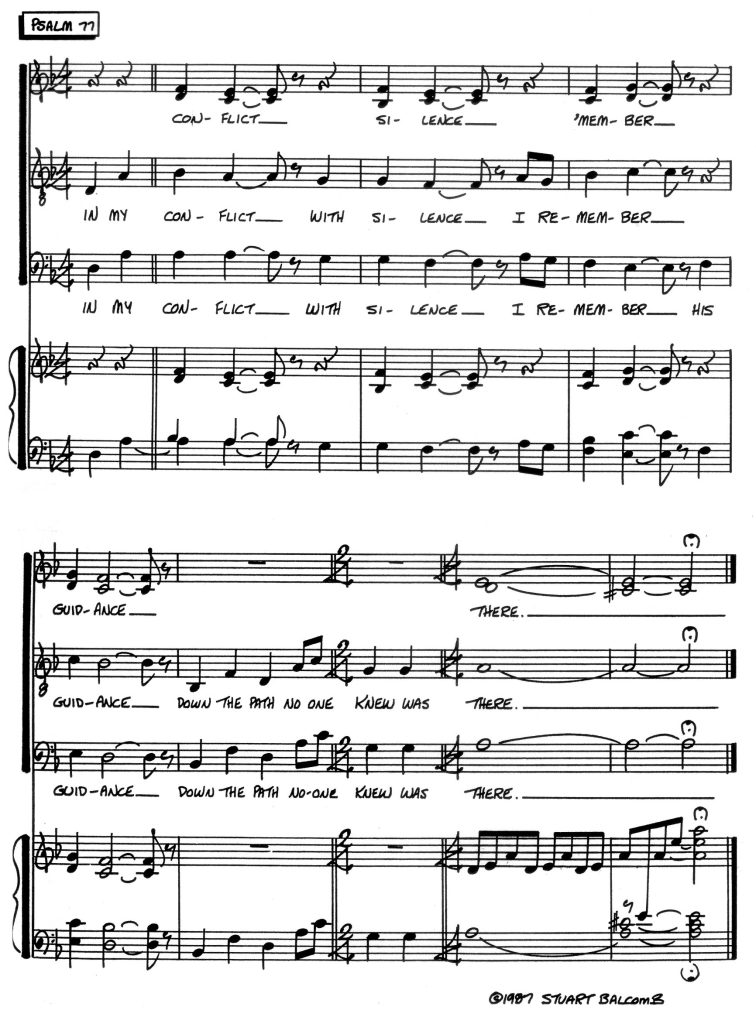
In my novel about an alchemist in 1352 London, Archbishop of Canterbury Simon Islip has a crisis of faith (as did many people including some clergy, especially during the trying times of the Black Plague). An excerpt from pg. 224:
In his private quarters Archbishop Islip knelt at an altar. His prayers had been interrupted by a deep quandary of his own. All his life he had sought a true, undeniable relationship with God. Although trained as a lawyer and having spent his early career in ecclesiastical law, he always felt he was being guided towards the pulpit. Years later, after his ordination, he had his first crisis of faith, not long after he became Archdeacon of Canterbury. It occurred during the first Easter service in the church, when the cross was brought out of its sepulchre. Ordinarily, Islip would have fought back tears as he witnessed the ceremony of Christ’s resurrection, but on that day he was numb. Intellectually, he knew the significance of what he was seeing, what he had witnessed with great emotion almost every year of his adult life, but all meaning seemed to have left him.
In the past, the smell of incense and the saining of herbs had a visceral effect on him, raising the hair on his neck and palpitating his heart as he witnessed the jubilation of the Ascension. Following the Mass, his spirits were always uplifted by seeing the people of his flock enjoying the many festivities of feasting and dancing—all to rejoice in the Risen Lord.
But on that Easter day, and even now as he knelt before the altar, he had no feelings at all. His lifelong attempts through extensive prayer to truly connect with God had never been reciprocated in a sentient way. But in spite of his every appeal for guidance from the Almighty seeming to fall on deaf ears, he soldiered on through his conflict with silence* and continued in his pursuit of a divine experience, one he could truly know was real.
•
*”Conflict with silence” comes from a phrase I wrote in an introit I composed for a church service in 1987 while in the employ of the Encino Presbyterian Church as Director of Music. For six of the ten years I worked there, I wrote an introit, custom fit to the sermon of each week. Every Monday, I was merely given the Old and New Testament readings and the title of the sermon, and the rest was up to me to figure out what to write.
This particular introit was tricky for me. It was based on Psalm 77, about God seeming to not hear one’s appeals, ending with: “Thy way is in the sea, and thy path in the great waters, and thy footsteps are not known. Thou leadest thy people like a flock by the hand of Moses and Aaron.”
I realized that this referred to the story in Exodus where Moses and his people were fleeing Pharoah’s army and were trapped between them and the Red Sea. The line I wrote, “down the path no one knew was there,” refers to the parting of the waters, allowing the Hebrews to cross to safety. I was glad to reuse a bit of it for what Islip was grappling with.